Why Washington State Is the Pacific Northwest's Most Haunted
Washington's history is shorter than New Orleans' or Savannah's, but it is no less violent. The state was built on dangerous, disposable labor: loggers crushed in the woods, miners buried in collapses, sailors drowned off a coast so deadly it earned the name "the Graveyard of the Pacific." It built grand institutions in the early 1900s, asylums, sanitariums, penitentiaries, and then quietly let many of them fail, leaving behind buildings full of people who died far from home and were never properly mourned. Add a "doctor" who starved over a dozen patients to death, a funeral home that processed Seattle's dead for two decades, and a castle so atmospheric that Stephen King set a haunted-house epic inside it, and you get a state where the paranormal feels less like superstition and more like unfinished business. The fog just makes it photogenic.
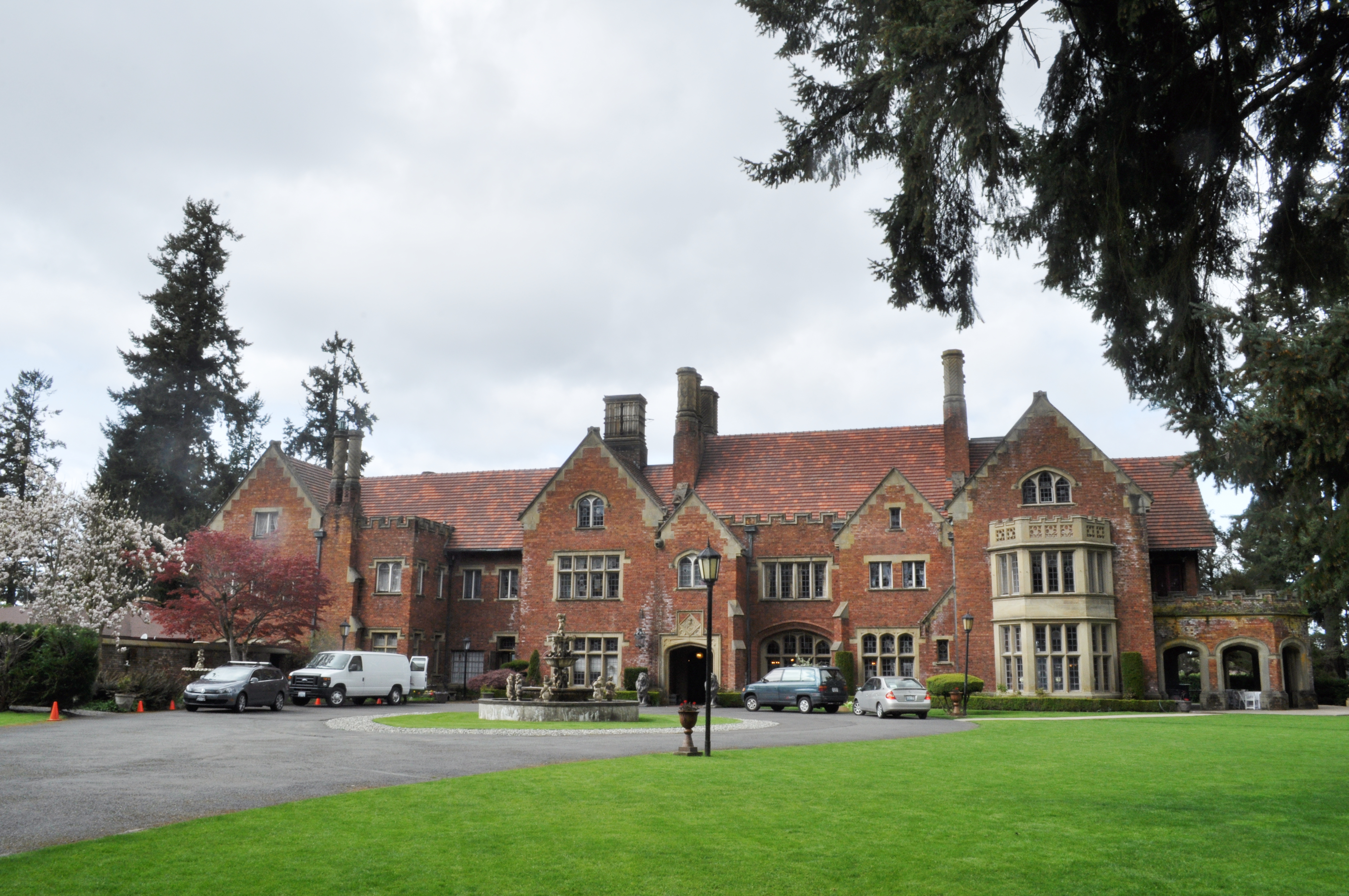
Thornewood Castle
📍 8601 N. Thorne Ln. SW, Lakewood, WA (American Lake)Thornewood is a genuine castle, dismantled in England, shipped around Cape Horn, and reassembled brick by 15th-century brick on the shore of American Lake in 1911 by Chester Thorne as a wedding gift for his wife Anna. Thorne imported a 400-year-old English manor, then surrounded it with formal gardens designed by the Olmsted Brothers. He died in the house in 1927. Anna outlived him. Both are reported to have never quite left. The mansion is now a bed and breakfast, which means guests pay to sleep in the most reportedly haunted rooms in the state.
The phenomena here are old-house classic, refined over a century: the apparition of Anna Thorne reflected in an antique mirror in her former bedroom, a gentleman believed to be Chester seen near the gardens and the gun room, doors that open and close on their own, and cold spots that move through the upper hallways. Staff and guests have reported a child near the lake, tied to a drowning on the property. It is the most documented private haunting in Washington, and the only one that has its own Stephen King miniseries.
Stephen King's "Rose Red" (ABC, 2002)
After a five-month nationwide search for a location, the producers of Stephen King's Rose Red chose Thornewood Castle as the face of the cursed, ever-growing mansion at the heart of the story. King rewrote portions of the script to set the action in Washington once the castle was secured, and the production spent roughly $500,000 restoring first-floor rooms to their early 20th-century appearance for filming, which ran in and around Seattle from August to December 2000. Cast and crew reported the kind of on-set incidents that tend to attach themselves to genuinely atmospheric buildings: a sound technician who heard footsteps and clattering pool cues in the empty billiard room, only to find the neatly racked cues scattered across the table when he checked. The three-night miniseries premiered on ABC on January 27, 2002, drew more than 18 million viewers, and permanently fused Thornewood's real reputation with its fictional one. Independent paranormal teams investigating the castle in the years since have repeatedly focused on the second floor and Anna's room, where an EVP reading "I'm watching" was reported captured near the mirror.
📍 View on the Phantom-Finder Map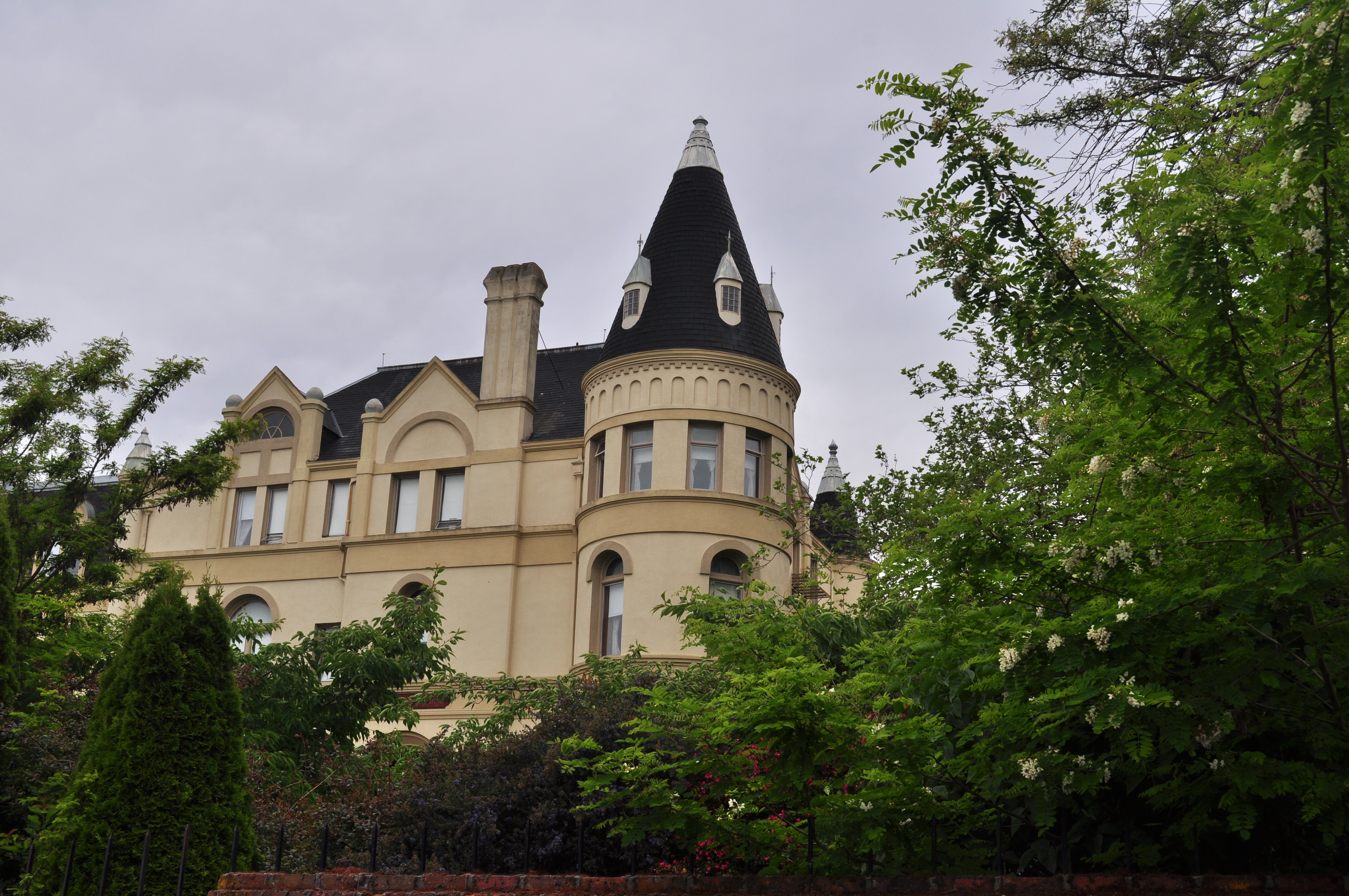
Manresa Castle
📍 651 Cleveland St., Port Townsend, WAManresa Castle was built in 1892 by Charles Eisenbeck, Port Townsend's first mayor, as a 30-room mansion overlooking the water. In 1927 it was bought by Jesuit priests, who added a wing with a chapel and sleeping rooms and renamed it Manresa Hall after the Spanish town where Ignatius Loyola founded the order. It became a hotel in the 1960s. Two ghost legends have followed it ever since: a monk said to have hanged himself in the building during the Jesuit years, and a young woman named Kate who, according to local lore, leapt from an upper window after learning her lover's ship had been lost at sea. Room 302 and Room 306 are the rooms guests request when they want company.
Ghost Adventures S11E03: "Manresa Castle" (Travel Channel, Sep 5, 2015)
Zak Bagans, Nick Groff, Aaron Goodwin, and Billy Tolley traveled to Port Townsend to investigate Manresa Castle's reputation for violent hauntings, filming over three days and locking down overnight in the guest rooms, the chapel wing, and the tower. The investigation produced a strong run of evidence on camera: a door that swung open on its own, a chair that tipped without contact, and unexplained footsteps captured in empty corridors. The episode's most discussed sequence centered on Aaron Goodwin, who was repeatedly mimicked and antagonized by an entity during a lockdown, with the spirit appearing to respond directly to his words. The team captured what they presented as an unexplained child's laugh, an audio anomaly with no source present in the building. Zak's evidence review tied the activity to the building's documented suicides and the long Jesuit residency, classifying Manresa Castle as a genuinely active location with multiple intelligent responses rather than a simple residual loop.
📍 View on the Phantom-Finder Map
Kells Irish Pub (Butterworth Building)
📍 1916 Post Alley / 1921 First Ave., Seattle, WA (Pike Place)The Butterworth Building was constructed in 1903 as the home of Butterworth & Sons, the first building in Seattle purpose-built as a mortuary. For nearly two decades it processed the city's dead, including, by many accounts, victims of the 1918 influenza pandemic, with embalming rooms in the basement and a body elevator running between floors. Kells Irish Restaurant and Pub now occupies that basement. The bar where patrons order pints sits in the rooms where Seattle prepared its corpses for burial, which is either a great conversation starter or a very bad idea, depending on who you ask after midnight.
Ghost Adventures S04E14: "Kells Irish Pub" (Travel Channel, Dec 17, 2010)
Zak Bagans, Nick Groff, and Aaron Goodwin investigated the Butterworth Building after staff reported footsteps, whispers, moving glassware, and the apparition of a young girl seen on the stairs and in the bar. Locked down overnight in the former mortuary, the team ran EVP sessions throughout the basement and captured several responses that became some of the episode's signature evidence, including phrases the investigators interpreted as "get us, Hazard," "get me outta here," and "do something quicker." The crew reported footsteps and whispering in a building they had personally confirmed was empty and sealed. The investigation's most striking visual claim was a photograph the team captured of what appeared to be a disfigured child seated on the steps, consistent with the long-running staff reports of a little girl. Zak's review concluded the Butterworth Building retains the imprint of its mortuary years, with spirits the team characterized as still searching for some kind of resolution, fitting for a building that handled the dead and then became a place for the living to drink directly on top of them.
📍 View on the Phantom-Finder Map
Northern State Hospital
📍 Northern State Recreation Area, Sedro-Woolley, WA (Skagit County)Northern State Hospital opened in 1912 as a model psychiatric institution on a self-sufficient 1,000-acre campus with its own farm, dairy, and cannery, designed in part by the Olmsted Brothers, who clearly had a hand in much of Washington's most beautiful and most haunted real estate. At its peak it housed more than 2,000 patients. It also practiced the medicine of its era, which included lobotomies, electroshock, and a hilltop cemetery where patients were buried under numbered markers rather than names, their identities effectively erased. The hospital closed in 1973. Many of the buildings still stand, slowly decaying behind chain-link, which is exactly the kind of setting that produces both genuine reports and the strong urge to make them up.
Ghost Hunters S03E13: "Lost Souls" (Syfy, 2007)
TAPS investigators Jason Hawes and Grant Wilson brought the Ghost Hunters team to Northern State Hospital at the request of the site's facility manager, with trainee Kris Williams joining for the investigation. The team set up in the abandoned ward buildings and corridors, running EVP sessions and EMF sweeps through rooms that had stood empty for decades. The investigators documented unexplained sounds and reported the heavy, oppressive atmosphere common to former asylums, focusing on the wards and the patient buildings where the most activity had been reported by people working on the grounds. The episode placed Northern State firmly on the map of credible Pacific Northwest investigations, and the abandoned campus has remained a destination for paranormal teams ever since, drawn by the wards, the tunnels, and the numbered graves of the patients whose names the state never bothered to keep.
📍 View on the Phantom-Finder Map
Merchant's Cafe & Saloon
📍 109 Yesler Way, Seattle, WA (Pioneer Square)Merchant's Cafe is Seattle's oldest restaurant, operating continuously in the same Pioneer Square building since 1890, which makes it older than the state of Washington itself. The neighborhood it sits in was rebuilt on the ashes of the Great Seattle Fire of 1889 and sits directly above the Seattle Underground, the buried original street level that turned the area into a literal layer cake of the city's past. In its early decades Merchant's served gold-rush prospectors heading to the Klondike, and the upper floors reportedly operated as a brothel. A 1938 fire is tied to the deaths associated with the building. The result is a bar with a basement full of stories and, according to the staff, a few residents who never closed out their tab.
The Dead Files (Travel Channel, 2013)
The Dead Files pairs physical medium Amy Allan with retired NYPD homicide detective Steve DiSchiavi, who investigate independently and compare findings only at the reveal, a format built to keep the medium from being influenced by the history. At Merchant's Cafe, Allan walked the building blind and identified multiple entities, most notably a female presence she connected to a woman tied to the building's past, along with a male spirit she described in the bar area, later associated with a former bartender. She located cold spots and areas of activity in the basement, the same basement where staff had long reported a little girl and a little boy, children whose deaths are linked in local accounts to the building's fire. DiSchiavi's independent archival research into Pioneer Square's brothel era, the gold-rush traffic, and the recorded deaths on-site lined up with Allan's impressions at the reveal, placing Merchant's among the more historically corroborated cases the show investigated in the Pacific Northwest.
📍 View on the Phantom-Finder Map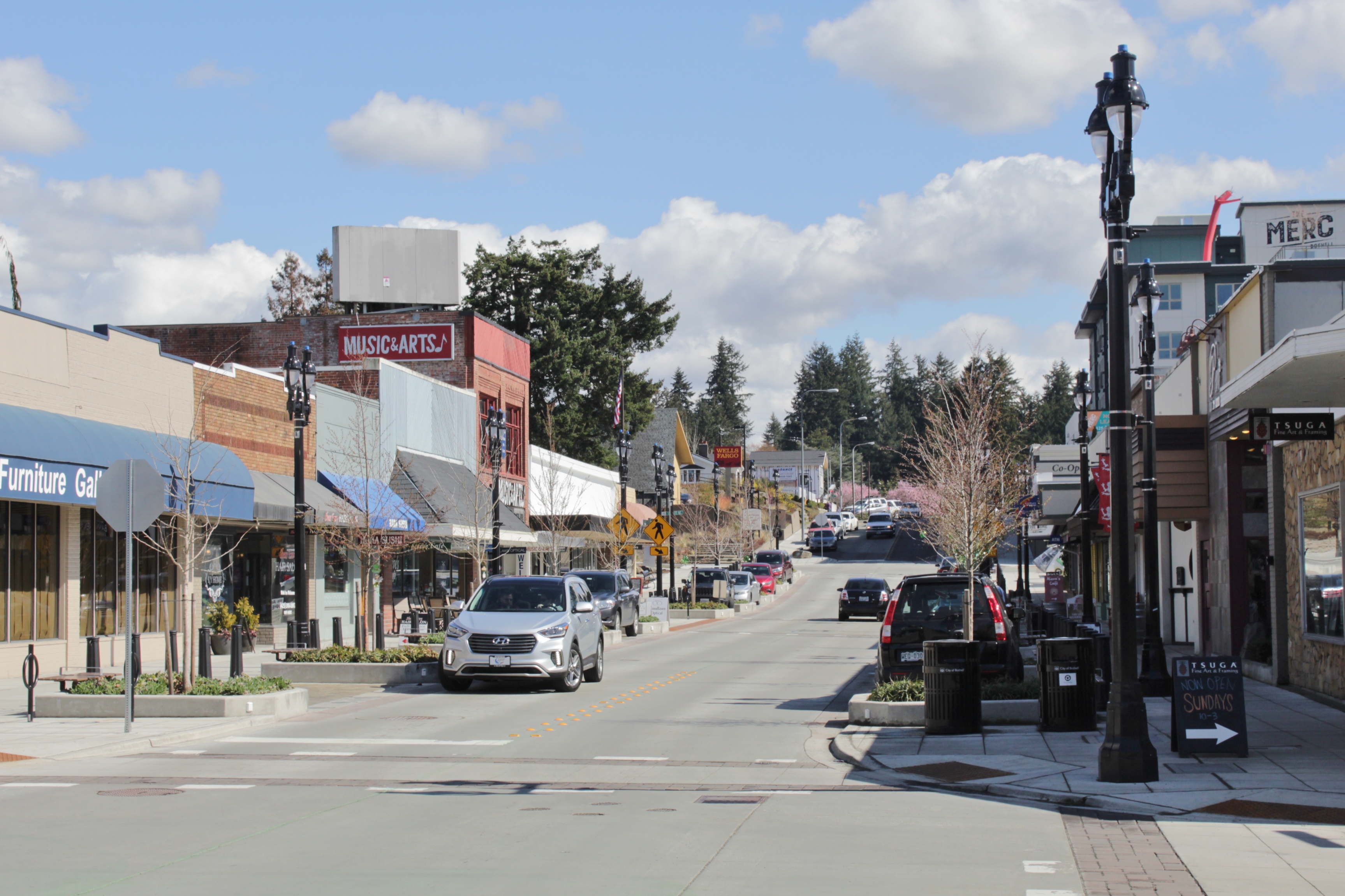
The Bothell Hell House
📍 Private residence, Bothell, WA (greater Seattle)The most disturbing entry on this list is not a castle or a grand hotel. It is an ordinary suburban house in Bothell, just north of Seattle, that became locally infamous for a documented run of violent activity. According to the family who lived there and the investigators who came after, the home produced phenomena that escalated far past the usual cold-spot-and-footsteps catalog: crosses and Bibles reportedly burned, heavy furniture flipped, and demonic-looking symbols said to appear scratched into surfaces. The building is a private residence, so it stays unnamed and off the tour circuit, but its reputation as the "Bothell Hell House" has made it one of the most talked-about modern hauntings in the state.
Ghost Adventures S10E10: "Demons in Seattle" (Travel Channel, Feb 28, 2015)
Zak Bagans and the Ghost Adventures crew came to the Seattle area to validate claims of a powerful, malevolent entity tormenting the family in the Bothell home, an investigation the show framed as a possible demonic infestation rather than a routine residual haunting. The episode documented the family's accounts of burned religious objects, furniture moved or overturned with no physical cause, and threatening symbols. The team conducted their lockdown focused on the rooms where the family reported the worst activity, treating the case with the heightened caution Ghost Adventures reserves for what it classifies as inhuman or demonic locations. Zak's review presented the Bothell house as one of the more aggressive private residences the crew had investigated, a case where the reported activity was directed, escalating, and hostile to the people living there rather than passively attached to the building. It remains the state's signature modern poltergeist case.
📍 View on the Phantom-Finder Map
Starvation Heights (Hazzard Sanitarium)
📍 Olalla, WA (Kitsap Peninsula)In the early 1900s, Linda Burfield Hazzard opened a sanitarium on a wooded hilltop in Olalla and marketed a "fasting cure" for nearly every ailment. The treatment was exactly what it sounds like: patients were fed almost nothing, sometimes for weeks, supplemented with brutal enemas and massages, while Hazzard, who was licensed to practice fasting therapy but was no physician, oversaw their slow decline. At least a dozen patients died of starvation, and by some accounts the true number reached into the dozens. Hazzard had a habit of taking control of her dead patients' estates and possessions, which is what finally ended her, not the deaths themselves. After the starvation deaths of the wealthy British sisters Claire and Dora Williamson drew international attention, she was convicted of manslaughter in 1912. The locals had already named the place. They called it Starvation Heights.
The original sanitarium building burned down in 1935, but the site retains a reputation as one of the most genuinely unsettling locations in Washington. Visitors and paranormal investigators in the wooded area and nearby properties report cold spots, the feeling of being watched, disembodied moaning, and an oppressive heaviness that fits the history exactly: dozens of people who died slowly, deliberately, and far from anyone who could help them. Linda Hazzard herself died in 1938, reportedly while attempting her own fasting cure. She is buried not far from where she starved her patients.
📍 View on the Phantom-Finder Map
Old City Hall, Tacoma
📍 625 Commerce St., Tacoma, WACompleted in 1893, Old City Hall is an Italian Renaissance Revival landmark with a 150-foot clock tower that has loomed over downtown Tacoma for well over a century. It served as the city's seat of government until 1959 and has since cycled through offices, restaurants, and long stretches of vacancy, the kind of grand, half-empty historic building that tends to accumulate stories. Tacoma's most persistent legend is a spirit nicknamed "Gordon," blamed for the building's signature trick: the bell in the tower ringing on its own, sometimes in the dead of night, sometimes at dawn, with no one in the tower and, on occasion, no working mechanism to ring it.
Beyond the phantom bell, workers and tenants over the decades have reported the full catalog of historic-building activity: objects moved or hidden and later returned, elevators traveling between floors with no passengers, lights and equipment switching on and off, cold spots, and footsteps in empty corridors. The pranks are described as mischievous more than menacing, which has only made the building more of a fixture on Tacoma's ghost tours. Old City Hall is the rare haunting that locals talk about with something closer to affection than fear.
📍 View on the Phantom-Finder Map
Washington State Penitentiary
📍 1313 N. 13th Ave., Walla Walla, WAThe Washington State Penitentiary at Walla Walla opened in 1886, three years before Washington was even a state, and it has been in continuous operation ever since, which means more than a century of inmates, guards, riots, and executions have left their mark on the grounds. The prison carried out executions by hanging and later by lethal injection, and its history includes major riots and the everyday violence of long-term incarceration. It remains an active maximum-security facility, so it is not a place anyone is taking a ghost tour through, but its reputation as one of the most haunted institutions in the state is well established among guards, staff, and the regional paranormal community.
Reports from inside the older sections describe the kind of activity that gathers wherever people have died violently and against their will: shadow figures moving through cell blocks, disembodied voices and shouting in empty wings, doors and gates that operate without cause, footsteps echoing through corridors when no one is walking them, and an oppressive presence concentrated in the areas tied to executions and deaths. As a working prison closed to the public, the Walla Walla penitentiary is the most inaccessible location on this list, and arguably the one with the most concentrated history of human suffering behind it.
📍 View on the Phantom-Finder Map
Pantages Theater, Tacoma
📍 901 Broadway, Tacoma, WAOld theaters are reliably haunted, and the Pantages is no exception. Opened in 1918 as a vaudeville and silent-film palace, designed by the prolific theater architect B. Marcus Priteca for impresario Alexander Pantages, the building carries the layered glamour and tragedy that performance spaces seem to accumulate by nature. Generations of performers, ushers, and audiences have passed through it, and theaters, more than almost any other kind of building, are places where strong emotion was felt night after night in the same rooms. That, the lore holds, is exactly the kind of energy that lingers.
Staff and performers at the Pantages have long reported the classic theater hauntings: an apparition of a woman, often described as a former usherette, seen in the balcony and backstage areas; cold spots in the wings; the sense of being watched from empty seats during late rehearsals; footsteps and voices in dark, vacant parts of the house; and equipment and doors behaving on their own. Like Old City Hall a few blocks away, the Pantages is a beloved fixture of Tacoma's haunted reputation, a grand old building where the show, in some sense, reportedly never quite ends.
📍 View on the Phantom-Finder MapWashington State Paranormal TV: Complete Episode Reference
-
Stephen King's Rose Red: ABC Miniseries
Premiered January 27, 2002 · ABC · Filming location: Thornewood Castle, Lakewood · Director: Craig R. Baxley · Writer: Stephen King -
Ghost Adventures: "Kells Irish Pub"
S04 E14 · Travel Channel · December 17, 2010 · Location: Butterworth Building, Seattle · Investigators: Zak Bagans, Nick Groff & Aaron Goodwin -
Ghost Adventures: "Demons in Seattle"
S10 E10 · Travel Channel · February 28, 2015 · Location: Bothell Hell House, Bothell · Investigators: Zak Bagans & crew -
Ghost Adventures: "Manresa Castle"
S11 E03 · Travel Channel · September 5, 2015 · Location: Manresa Castle, Port Townsend · Investigators: Zak Bagans, Nick Groff, Aaron Goodwin & Billy Tolley -
Ghost Hunters (TAPS): "Lost Souls"
S03 E13 · Syfy · 2007 · Location: Northern State Hospital, Sedro-Woolley · Investigators: Jason Hawes, Grant Wilson & Kris Williams -
The Dead Files: Merchant's Cafe
Travel Channel · 2013 · Location: Merchant's Cafe & Saloon, Seattle · Investigators: Amy Allan & Steve DiSchiavi
Report compiled by Phantom-Finder Research Team • May 30, 2026 • Sources: IMDB, TVmaze, Travel Channel, Syfy, ABC, Ghost Adventures Wiki, The Dead Files, Ghost Hunters (TAPS), Wikipedia, Wikimedia Commons. Images via Wikimedia Commons (Public Domain / CC BY 2.0 / CC BY-SA 3.0 / CC BY-SA 4.0).